
How Can Leaders Improve Employee Engagement and Retention?
Employee turnover is costly, reaching up to 213% of the average salary of the team member who leaves within a year. Even when a team member stays beyond two years, companies still face about half of these expenses, pushing the break-even point closer to three years. This financial burden highlights the critical role of a strong company culture that fosters employee engagement.
Employees who are only somewhat engaged operate at 30% to 75% productivity, indicating significant untapped potential. By cultivating a feedback culture with regular feedback and positive reinforcement, organizations can inspire team members to increase discretionary effort and enhance overall performance.
Leadership and Feedback: The Cornerstones of a Positive Company Culture
More than 50% of employees feel compelled to leave their roles due to ineffective leadership rather than low compensation or benefits. This demonstrates that employees feel valued when they receive regular feedback and recognition. Cultivating a feedback culture with constructive feedback and positive reinforcement creates engaged employees who drive better business outcomes.
Robert McGraw from Full Swing Training & Development emphasizes, "First thing we need to do for engagement is call it a leadership development program."
Explore with us how employee feedback examples can replace perks to foster a supportive work environment and improve employee engagement.

What You'll Learn
▪️ Exploring misconceptions about employee engagement programs
▪️ Why positive feedback is vital for employee engagement and improved performance
▪️Effective tactics for designing employee engagement programs
▪️Examples of employee feedback and best practices for implementation
▪️Common errors to avoid in employee engagement strategies
Understanding Employee Engagement: Beyond Perks
Common Misconceptions About Employee Engagement
Many organizations mistakenly think that snacks, drinks, or casual perks in break rooms significantly boost employee morale and engagement. However, Robert McGraw, an employee engagement expert with Full Swing Training & Development, clarifies that while food and drinks in the break room are important, they are not the most crucial factors for keeping people engaged and retained. This misconception leads companies to invest heavily in amenities that provide only temporary satisfaction instead of focusing on core motivators for employees.

This superficial approach overlooks deeper drivers such as leadership quality and meaningful communication. When employees feel undervalued or lack purposeful feedback, no amount of perks can replace the need for constructive human interaction and professional growth opportunities.
The True Drivers of Employee Engagement
Leadership quality and development– Employees leave bosses, not companies.
Positive and constructive feedback– Recognizing effort encourages growth.
Recognition and coaching– Meaningful appreciation boosts motivation.
These factors represent a shift toward investing in behaviors and interactions that shape the employee experience rather than just surface-level comforts.
How Positive Feedback Drives Employee Engagement
Leadership's Role in Fostering a Feedback Culture
Positive feedback helps employees feel valued by clearly reinforcing their strengths, boosting confidence, and nurturing a company culture centered on continuous improvement. Unlike temporary perks, positive feedback encourages lasting engagement and loyalty among team members.
"Behavior is the highest ROI. It's way cheaper than constantly buying snacks for the break room," emphasizes Robert McGraw.
Organizations that encourage managers to provide regular, specific praise and constructive feedback effectively address the main causes of disengagement—poor leadership and lack of recognition. This strategy improves employee engagement, reduces turnover, and enhances overall business outcomes.
Effective Employee Feedback Examples in Team Meetings
Consider shifting focus from leadership to followership: do leaders inspire willful followership where people genuinely want to follow? Psychological safety, trust, transparency, taking responsibility for team challenges, and giving credit where due all contribute to alignment in purpose. Many companies mistakenly reward leaders solely based on results without considering the cost or impact on workplace culture and employee experience.
Employee Engagement Programs That Drive Performance and Build Company Culture
Leadership Development: The Key to Engaged Team Members
Successful employee engagement centers on leadership development that empowers team members. Leaders who provide regular feedback help employees feel valued and foster a positive feedback culture. This encourages engaged employees to contribute meaningfully, enhancing workplace culture and improving employee experience.

Positive feedback examples, combined with constructive feedback, create a work environment where employees feel supported and motivated. Regular team meetings emphasizing open communication and feedback improve employee performance and lead to better business outcomes. Employees who feel appreciated are more likely to be engaged and deliver excellent results.
Specific praise for recent accomplishments — “Your presentation to the client was outstanding and really helped close the deal. Good job!”
Recognition of effort and improvement — “I’ve noticed your coding speed and accuracy have improved a lot in the last month. Excellent progress!”
Constructive feedback with actionable suggestions — “Great job on the report. To strengthen it further, consider adding more data visualization.”

Building a Feedback Culture to Support Engaged Employees
Key Program Elements for Enhancing Employee Engagement
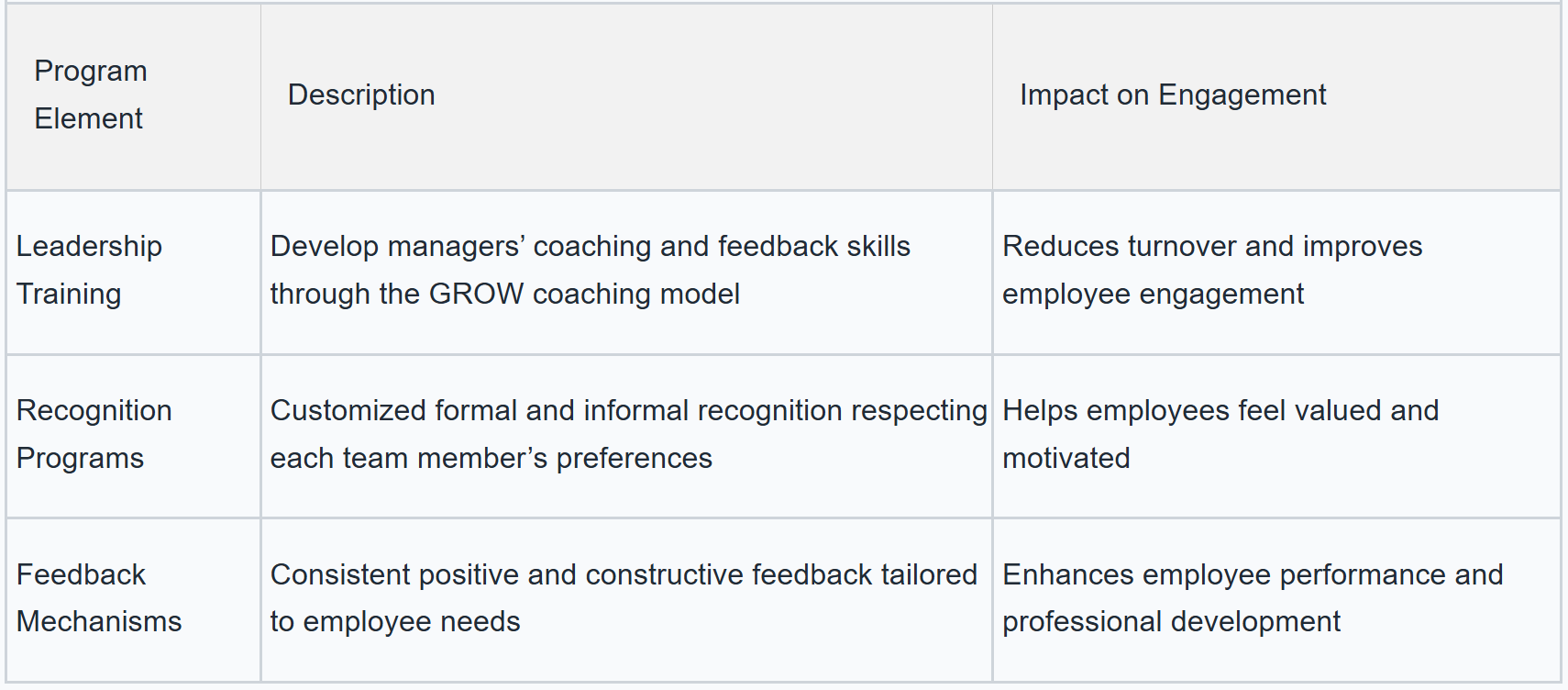
Embedding these elements into your company culture fosters a feedback culture where engaged employees feel valued. Understanding each team member’s unique recognition preferences—whether verbal praise, trophies, monetary rewards, public or private—is essential. Leaders who invest time to learn about their team members’ personal "why" and future aspirations, supported by tools like the free onboarding questionnaire on my website, cultivate a positive workplace culture.
Using Engagement Surveys and Beyond
Organizations increasingly look beyond traditional engagement surveys to include topics like resilience and continuous stress measurement. The Resilience Builder Assessment is a validated, state-of-the-art tool measuring resilience and the stress-performance curve. This can be enhanced by real-time feedback options such as smile buttons in key work areas and check-in text messages, which provide anonymity and encourage honest employee feedback.
Creating and Communicating Action Plans
Effective employee engagement depends on creating actionable plans based on survey results and communicating them transparently. Explaining the reasoning behind initiatives, the scale of investment, and expected business outcomes builds trust. Doing nothing or failing to communicate after collecting employee feedback is more damaging than taking no action at all. Follow-through and regular feedback help maintain a positive feedback culture and improve employee experience. Culture that drives superior business outcomes and a competitive advantage.
Common Mistakes and Misconceptions in Employee Engagement

Holding leaders accountable solely for engagement survey results, turnover, 360 feedback, and exit interviews without considering how results are achieved
Designing one-size-fits-all recognition programs that limit leaders’ ability to customize rewards that make team members feel truly valued
Failing to communicate the company’s direction and how each employee’s contribution matters in team meetings
Relying only on perks like snacks and freebies instead of fostering a genuine feedback culture
These common pitfalls often prevent organizations from effectively improving employee engagement. Employees who feel valued and receive regular feedback are more likely to become engaged employees. A positive workplace culture emphasizing psychological safety, constructive feedback, and professional development helps team members thrive. Leaders must focus on servant leadership and invest in coaching to build trust and purpose. Employee feedback examples show that feedback helps create a work environment where people feel motivated and appreciated. Ultimately, ongoing leadership behaviors and a strong feedback culture drive better business outcomes far beyond superficial perks.
Actionable Tips for Leaders to Enhance Employee Engagement Positive Feedback
Focus on leadership development programs that improve manager-employee relationships by clearly communicating where we are going and why at all levels
Incorporate regular positive feedback and recognition into daily routines to ensure employees feel valued and motivated
Train managers on delivering constructive feedback effectively, emphasizing how feedback helps improve employee performance and engagement
Continuously measure engagement outcomes to refine programs, fostering a strong feedback culture and improving business outcomes
People Also Ask
What are some examples of positive feedback for an employee?
Examples include acknowledging recent achievements, noting improvement efforts, and offering specific praise aligned with workplace goals that boost confidence and motivation.

What are the 5 C's of employee engagement?
The 5 C's are: Connect, Career, Clarity, Convey, and Congratulate — focusing on meaningful relationships, career growth, role clarity, communication, and recognition.
What is a good example of positive feedback?
A good example is: “Your thorough analysis during the last project greatly helped our decision-making process — keep up the excellent work!”
What are the 5 R's of feedback?
The 5 R's include: Recognize, Reflect, Request, Reinforce, and Reframe, guiding constructive and supportive feedback exchanges.
Key Takeaways
Employee engagement is influenced more by leadership behavior, psychological safety, and positive feedback than by perks.
Effective feedback programs enhance retention, motivation, and overall employee performance.
Leadership development plays a vital role in successful engagement initiatives and fostering a strong company culture.
Consistent, meaningful recognition and promoting work-life balance through flexible work hours and locations help employees feel valued and create a positive workplace culture.
Conclusion
Executives play a crucial role in developing leaders and establishing genuine, positive feedback practices. When employees feel valued through regular feedback, it creates a workplace culture that supports engaged employees and boosts overall organizational success.
Take Action to Improve Employee Engagement and Company Culture
Do you know where your employee engagement stands and why? Use data to assess how your team members manage stress and performance. Identify resilience gaps causing burnout and turnover. What percentage of employees feel productive? Look for patterns in exit interviews and employee feedback examples. Hold leaders accountable for both costs and benefits, and hire and develop leaders aligned with your company culture. Invest in onboarding, buddy programs, and flexible recognition to reduce early turnover and improve employee performance. Leadership training and recognition systems encouraging regular feedback help employees feel valued and foster a strong workplace culture.
Imagine a workplace where people are engaged, aligned, and energized. It's closer than you think. Visit www.fullswingtd.com to get started with assessments, coaching, and courses.
Connect with the featured expert on LinkedIn: Robert McGraw
Want your business featured? Join the leaders already spotlighted on Hugh's Profit Path. Apply for your interview today.

Sources