
Launching an E-commerce Startup: Challenges, Strategies, and the Power of Persistence
Launching an e-commerce startup is an exciting yet complex journey that demands not only a solid business idea but also a deep understanding of technology, market competition, and a strong dedication to daily effort. For aspiring entrepreneurs, the path to online business success can be unclear, cluttered with misconceptions and unexpected hurdles. This article delves into the real challenges and proven strategies to help you launch and grow your e-commerce startup effectively.
Understanding the Realities of Launching an E-commerce Startup
Common Misconceptions About Starting an Online Store
Many people envision launching an e-commerce startup as a quick and straightforward way to make money, often underestimating the complexities involved. The reality, however, is quite different. E-commerce requires detailed planning, constant adaptation, and understanding the nuances of running an online business beyond just listing products. Sara Quintero, founder of KarmaChic, highlights this experience from her own journey: "When I launched this, I thought I thought that it actually was gonna be a lot easier than it has been with the intricacies. "

It is common for newcomers to overlook how much dedication and strategic thinking a successful online store demands. Building an efficient online platform involves integrating various tools and technologies properly to ensure a smooth shopping experience for customers. Expect learning curves, and prepare to invest time in understanding market dynamics, legal requirements, and customer engagement.
The Role of Technology and AI in Modern E-commerce Platforms
Technology, especially advances in artificial intelligence, has transformed how e-commerce startups operate by streamlining processes like marketing automation, inventory management, and customer service.
Sara Quintero explains the impact of technology in her startup journey: "With all the AI and the new technology, it is a lot easier. It's just putting all the pieces together and so things aren't fragmented and staying in front of all the new technology is the best place to be. "
Utilizing AI tools allows ecommerce businesses to anticipate market trends, optimize product listings, and personalize customer experiences at scale. However, mastering these technologies requires consistent learning and adapting to frequent updates. Entrepreneurs who successfully leverage these innovations surpass those who neglect technological advancements, gaining a competitive edge in the crowded online marketplace.
Key Challenges Faced When Launching an E-commerce Startup
Competition from Established Online Marketplaces and Commerce Platforms
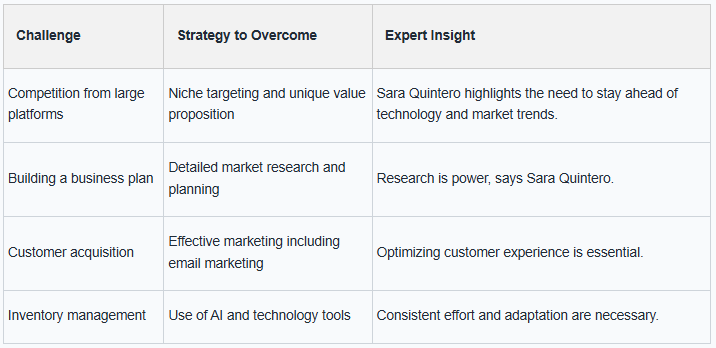
One of the greatest hurdles for e-commerce startups is competing against powerful, well-established online marketplaces and commerce platforms. These giants benefit from massive customer bases, robust logistics, and extensive marketing budgets. New startups must find their unique value proposition and niche to attract and retain customers. Sara Quintero experienced this keenly, having closed a brick-and-mortar because it couldn’t compete with growing online platforms.

To compete in today's digital commerce landscape, it's essential to focus on specialized products or services that large marketplaces might overlook or provide unique customer value. Building brand loyalty through exceptional service and targeted marketing becomes a priority to survive amid fierce competition.
Building a Strong Business Model and Business Plan
A detailed and adaptable business model is critical for launching an e-commerce startup. It defines how your business will create value, generate revenue, and sustain growth. A comprehensive business plan outlines your target market, competitive landscape, operational costs, and marketing strategies, serving as a roadmap to guide decision-making and attract investors.
Many startups fail because they neglect thorough planning, expecting their online store to grow organically. Sara emphasizes the importance of building a solid foundation through research and planning. Developing your business model in parallel with market research ensures you address challenges proactively and align your offerings with customer needs.
Register Your Business and Legal Considerations
Launching an e-commerce startup also involves critical legal and regulatory steps, including registering your business, obtaining necessary licenses, and understanding tax obligations. Compliance with consumer protection laws and online selling regulations protects your business from potential liabilities and builds customer trust.
Proper registration also unlocks opportunities to access banking services, payments processors, and vendor partnerships needed to scale your online business efficiently. Early consultation with legal or business advisors is advisable to set your startup up for sustainable success.
Strategies for Success in Launching an E-commerce Startup
Conducting Thorough Market and Competitor Research
Research is the backbone of a successful e-commerce startup. Understanding your competitors’ strengths, weaknesses, and market positioning helps you carve out your niche. Likewise, evaluating consumer preferences and market trends informs product selection and marketing approaches.
Sara Quintero advises, "Do a lot of research. Research your competitors. Research the market. Research technology. Basically, that is what I did. And I kinda built silently for a good year prior to really putting myself out there and scaling. " This research phase allows you to build your business quietly while gathering insights that reduce risks and enhance strategic planning.
Developing an Effective Marketing Strategy Including Email Marketing
Marketing is vital for traffic acquisition and brand recognition in crowded online spaces. An integrated marketing strategy often includes SEO, social media, content marketing, and especially email marketing, which Sara identifies as a key tool. Personalized email campaigns nurture customer relationships and encourage repeat purchases at a relatively low cost.
Optimizing your marketing efforts ensures you attract relevant, high-conversion traffic. Combining targeted ads with organic outreach builds awareness and drives sustainable growth. Consistency in messaging and branding across channels fosters trust and recognition among consumers.
Optimizing Customer Experience and Offering Free Shipping
Customer experience is paramount in e-commerce. Smooth website navigation, fast load times, straightforward checkout, and responsive customer service enhance shoppers' satisfaction. Offering benefits like free shipping reduces purchase barriers and increases conversion rates, which many consumers expect today.
Focusing on the customer journey at every touchpoint improves loyalty and word-of-mouth referrals. Startups must continually analyze customer feedback and website metrics to refine their platform and meet evolving expectations.

Inventory Management and Product Selection

Effective inventory management ensures that products are available when customers want to buy them without the costs associated with overstocking. Choosing the right products based on market demand and supplier reliability builds a trustworthy reputation.
Modern AI-driven inventory tools help predict demand patterns and automate stock reordering, minimizing losses. Product selection aligned with your brand purpose and customer desires strengthens your competitive position and supports long-term growth.
The Importance of Persistence and Consistency in E-commerce Success
Daily Commitment and Showing Up to Build Your Online Business
Launching an e-commerce startup is not a sprint but a marathon requiring daily effort. Consistency in work habits, decision-making, and adapting to challenges separates successful entrepreneurs from those who struggle. Sara Quintero emphasizes this vital mindset: "Putting one foot in front of the other and actually showing up every day. If you don't, you have to be very strong minded and really put in the work. "
This persistence helps build momentum, enabling startups to refine strategies, overcome obstacles, and capitalize on emerging opportunities. Committing fully and engaging with every aspect of your business daily builds resilience and growth.
Overcoming Common Mistakes and Misconceptions

Common pitfalls include rushing to market without adequate preparation, underestimating competition, and ignoring customer feedback. Misconceptions about rapid success or effortless online selling can derail startups early on.
By maintaining a learner’s mindset, seeking mentorship, and reviewing performance regularly, entrepreneurs can avoid these traps and continuously improve their e-commerce operations.
What You'll Learn: Essential Steps to Launch Your E-commerce Startup
How to research and analyze your market and competitors effectively
Key components of a successful business plan and model for e-commerce
The role of technology and AI in streamlining operations
Marketing strategies including email marketing and customer experience optimization
The critical importance of persistence and daily effort

Frequently Asked Questions About Launching an E-commerce Startup
What is the first step in launching an e-commerce startup?
The first crucial step is comprehensive research. Understand your target market, analyze competitors, study available technologies, and formulate a clear business plan. This groundwork builds a strong foundation for your e-commerce venture.
How important is technology in running an online store?
Technology is essential for efficient operations, from website management and inventory tracking to customer engagement through AI-powered tools. Staying ahead with technology helps streamline processes and improve customer experience, as Sara Quintero points out.
What separates successful e-commerce entrepreneurs from those who struggle?
Persistence and consistency are key differentiators. Successful entrepreneurs show up every day, put in deliberate effort, and continuously adapt. As Sara advises, “You have to be very strong minded and really put in the work. ”
Key Takeaways for Aspiring E-commerce Entrepreneurs
Launching an e-commerce startup requires more than just a good idea; it demands consistent effort and strategic planning.
Leveraging AI and new technologies can simplify complex processes but requires staying updated.
Thorough research on competitors, market, and technology forms the foundation of success.
Persistence and daily commitment differentiate successful entrepreneurs from those who struggle.
Building a strong business model and focusing on customer experience are critical.
Conclusion: Embracing the Journey of Launching an E-commerce Startup
Begin your journey of launching an e-commerce startup by dedicating yourself to daily effort, thorough research, and utilizing the best commerce platform technology. Stay flexible and persistent, as this hard work will establish a strong foundation for long-term success in your online store. If you need any assistance,Sara Quinterocan guide you through the process.